Why Water Sampling Feels Safer When Nothing Is Left to Chance
For healthcare estates teams, universities, and social housing providers, water sampling is about far more than ticking a compliance box. It is about protecting people, reducing risk, and ensuring every action is followed through correctly.
But here’s the real question:
Do you actually feel confident that every sample is being managed properly?
Most organisations still rely on spreadsheets, emails, contractor diaries, laboratory portals, and manual reminders to coordinate sampling programmes. The result is fragmented processes, duplicated work, unclear accountability, and rising costs.

And when compliance responsibilities are spread between contractors, direct employees, laboratories, and estates teams, it becomes incredibly difficult to maintain complete visibility.
That is exactly why platforms like SampleHub are changing the way organisations manage water hygiene compliance.
The Hidden Cost of Manual Sample Management
Many organisations know how many samples they take each month. Far fewer know how much those samples truly cost.
The cost is not just the laboratory fee. It includes:
- Administrative coordination
- Contractor scheduling
- Follow-on remedial actions
- Resampling requirements
- Missed deadlines
- Compliance reporting
- Audit preparation
- Internal communication between departments
In sectors like healthcare and higher education, where estates teams are already under pressure, these hidden inefficiencies quickly become expensive.
Worse still, manual processes create uncertainty.
Was the sample taken on time?
Who reviewed the result?
Was remedial work completed?
Was the resample carried out?
Can you prove it during an inspection?
When the answers to these questions sit across disconnected systems, the risk grows significantly.
Why Healthcare Organisations Need Complete Visibility
Healthcare environments operate under some of the strictest compliance frameworks in the UK. Regulations such as ACOP L8 and HTM 04-01 require clear evidence that sampling programmes are properly managed and acted upon.
In hospitals and care environments, delays or failures in water hygiene management can directly affect patient safety.
That means compliance is not simply about collecting samples. It is about ensuring that every follow-on action is coordinated and documented correctly.
This becomes particularly difficult when responsibilities are split across multiple stakeholders:
- Water hygiene contractors
- Internal estates teams
- Compliance managers
- Laboratories
- Infection prevention teams
- External consultants
Without a centralised system, communication gaps are inevitable.
Universities Face Growing Complexity
University estates teams manage large, complex estates that often include:
- Student accommodation
- Laboratories
- Sports facilities
- Catering environments
- Teaching blocks
- Medical research buildings
Each area may require different sampling schedules, action thresholds, and reporting requirements.
At the same time, many universities operate with lean estates teams managing thousands of compliance tasks.
Manual tracking methods simply struggle to scale.
When sampling programmes are managed through spreadsheets and disconnected contractor reports, it becomes difficult to maintain a real-time overview of compliance status across campus.
A single missed action can create significant operational and reputational risk.
Social Housing Providers Need Better Coordination
Social housing providers face their own unique challenges.
Properties are geographically dispersed. Contractors are often external. Residents may be vulnerable. Access appointments can be difficult to coordinate.
In many cases, housing associations are managing sampling alongside wider compliance responsibilities including fire safety, asbestos, gas servicing, and repairs.
The result is that water hygiene can become reactive rather than proactive.
What organisations need is a way to coordinate:
- Sampling schedules
- Contractor activities
- Laboratory results
- Escalations
- Remedial actions
- Resident communication
- Audit evidence
from one central location.
The Problem Isn’t Sampling, It’s What Happens Afterwards
Most organisations can arrange for a sample to be collected.
The real challenge begins after the result arrives.
A failed sample may trigger:
- Repeat sampling
- System flushing
- Temperature checks
- Tank inspections
- Remedial works
- Notifications to internal stakeholders
- Contractor callouts
- Escalation procedures
If those actions are managed manually, there is a real risk that something gets delayed, duplicated, or missed altogether.
This is where automation becomes critical.
According to SampleHub, the platform was specifically developed to automate the interpretation of results, trigger follow-on actions, notify the right people, and maintain a complete audit trail throughout the process.
That means organisations are no longer relying on individuals to remember what needs to happen next.
Better Oversight Creates Better Compliance
One of the biggest advantages of a centralised sampling management platform is visibility.
Instead of chasing emails and contractor updates, organisations can see:
- What samples are due
- Which results require action
- What tasks are overdue
- Who is responsible
- Whether remedial actions are complete
- Which sites carry the highest risk
in real time.
For compliance managers and estates directors, this creates far greater confidence during inspections and audits.
It also helps organisations move from reactive compliance management to proactive risk control.
Audit Readiness Shouldn’t Be a Last-Minute Panic
Anyone involved in healthcare, education, or housing compliance understands the pressure that inspections can create.
Preparing evidence manually often means pulling together information from multiple systems and individuals at short notice.
This wastes valuable time and increases the likelihood of incomplete records.
Modern compliance platforms are designed to maintain audit-ready documentation continuously.
That means organisations can quickly demonstrate:
- Sampling history
- Laboratory results
- Escalation records
- Completed actions
- Communication trails
- Compliance reports
without scrambling for paperwork.
Confidence Comes From Control
Ultimately, organisations do not just want to “manage samples.”
They want confidence.
Confidence that samples are completed correctly.
Confidence that nothing has been overlooked.
Confidence that contractors and direct employees are working from the same information.
Confidence that follow-on actions are coordinated properly.
Confidence that compliance evidence is available when needed.
That confidence only comes when the entire process is connected.
As water hygiene compliance becomes more demanding across healthcare, universities, and social housing, organisations need systems that remove uncertainty rather than add to it.
Because when sampling programmes are fragmented, risk increases.
But when every stage, from scheduling to remedial action, is managed in one place, compliance becomes simpler, faster, and far safer.
Latest Articles
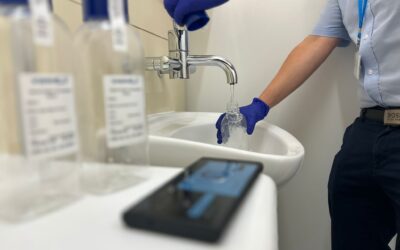
Building a Risk-Based Water Sampling Programme with Automation
Water sampling has long been a cornerstone of effective water hygiene management. Whether you're responsible for a healthcare facility, commercial property, housing portfolio or industrial site, your sampling programme provides the evidence needed to demonstrate...

Automated Water Sample Management for Housing Associations: Visibility and Oversight Across 100+ Buildings
Housing associations have a growing responsibility to ensure water safety across increasingly complex property portfolios. Managing water sampling programmes across 100, 200 or even 1,000 buildings is no longer something that can be effectively handled with...
Still Managing Your Water Sampling Programme in Excel? It’s Time to Move with the Times
For years, Excel has been the default tool for managing water sampling programmes. It's familiar, inexpensive and already installed on almost every computer. But just because it can be used doesn't mean it should be. As water hygiene compliance becomes more demanding...
Get in Touch with the Sample Hub Team
Have a question about Sample Hub or want to discuss how we can support your sampling programme?
We’d love to hear from you.
SampleHub removes the manual effort from sampling programmes. Automatically interpret results, schedule resamples, trigger actions, and notify the right people, all based on rules tailored to your site.